Do I really need a retaining wall, or can I just let the slope be?
That's a question I hear a lot, especially from folks with yards that aren't perfectly flat. Look, if you've got a significant slope on your property, a retaining wall isn't just about making things look neat; it's often about preventing bigger headaches down the road. Without proper support, that soil can start to erode, especially with our spring thaws and occasional heavy downpours here in Provo. That means your landscaping could wash away, your foundation could be compromised, or you might even end up with drainage issues around your house. A well-built concrete retaining wall holds that soil back, creating usable, level space and protecting your home's integrity. It's an investment in stability, not just aesthetics.
What's the difference between a block retaining wall and a poured concrete wall?
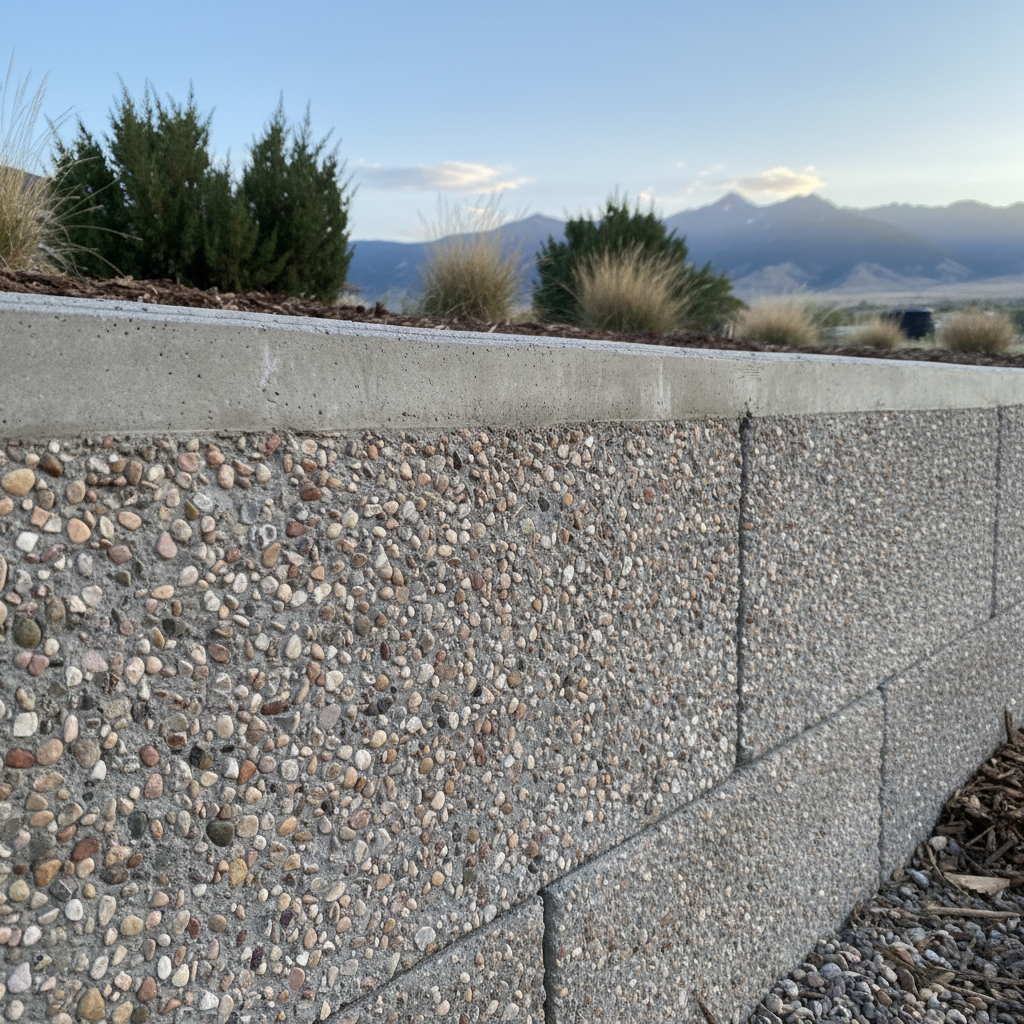
Good question, because they both do the same job but in different ways. Block retaining walls, often called segmental retaining walls, are built with interlocking concrete blocks. They're usually dry-stacked, meaning no mortar, and rely on gravity and the block's design to hold things together. They're good for shorter walls, and they offer a lot of design flexibility with different colors and textures. Poured concrete walls, on the other hand, are exactly what they sound like: we build a form, pour wet concrete into it, and let it cure. These are incredibly strong, monolithic structures. They're ideal for taller walls, heavy loads, or when you need maximum durability and a completely solid barrier. They can also be faced with stone or stucco for a different look. For serious earth retention, especially if you're dealing with a big slope or heavy loads like a driveway above, poured concrete is usually the way to go. It just offers that extra level of structural integrity.
How much does a concrete retaining wall cost in Provo?
Alright, let's talk numbers, because everyone wants to know this. Giving you an exact price without seeing the job is like trying to guess the weather a month out – impossible. But I can tell you what goes into it. The cost depends on a few big factors: the height and length of the wall, the type of concrete (poured vs. block), the accessibility of the site (can we get equipment in easily?), the soil conditions (we sometimes hit some pretty stubborn clay around here, especially closer to the mountains), and what kind of drainage and backfill are needed. A simple, short block wall might run you less per linear foot than a tall, reinforced poured concrete wall that needs extensive excavation and rebar. Generally, you're looking at anywhere from $40 to $100+ per square foot of face area for materials and installation. The best thing to do is have us come out, take a look, and give you a solid, written estimate. That's how we do things at Kingdom Concrete Contractors Provo – no surprises.
What about drainage? Is that really important for a retaining wall?
Absolutely, 100%, yes. Drainage is probably the most critical thing for a retaining wall's longevity, especially with the freeze-thaw cycles we get in Provo. Water is the enemy of any retaining wall. If water builds up behind the wall, it creates hydrostatic pressure, which can push the wall over, crack it, or cause it to lean. We always install a drainage system behind the wall, typically using a perforated pipe (a French drain) at the base, surrounded by gravel. This collects any water that seeps through the soil and directs it away from the wall. We also use specific backfill materials, like gravel or crushed stone, directly behind the wall to allow water to move freely to that drainpipe. Skip proper drainage, and you're just asking for trouble down the line.
How long does a concrete retaining wall last?
A properly designed and built concrete retaining wall, whether it's poured or block, should last for decades. We're talking 50 to 100 years, easily. Poured concrete, especially with good rebar reinforcement, is incredibly durable. Block walls are also very robust. The key is in the installation – making sure the foundation is solid, the drainage is correct, and the materials are high quality. If you cut corners on any of those things, you'll shorten its lifespan significantly. But if it's done right, you'll likely never have to worry about replacing it in your lifetime.
Do I need a permit for a retaining wall in Provo?
Most likely, yes. The City of Provo, like most municipalities, has regulations about retaining walls. Generally, if your retaining wall is over a certain height – often 3 or 4 feet – you'll need a building permit. Even if it's shorter, if it's supporting a structure or is part of a larger landscaping project, you might still need one. The permit process ensures that the wall is designed and built to code, which means it's safe and structurally sound. It protects you, your neighbors, and your property. We can help you understand the permit requirements and even assist with the application process if you choose us for your project. It's not something you want to skip.
Can I build a retaining wall myself, or should I hire a professional?
Look, I'm a contractor, so you might think I'm biased, but this isn't just about getting work. Building a retaining wall, especially one that's going to last and do its job correctly, is a pretty complex undertaking. It involves understanding soil mechanics, proper drainage, foundation work, and often, significant excavation. If you're talking about a small, decorative garden border that's less than a foot high, sure, a DIY approach might be fine. But for anything structural, anything over a couple of feet, you really need a pro. One mistake in the design, foundation, or drainage can lead to a wall failure, which can be expensive to fix and potentially dangerous. We've seen plenty of DIY walls fail, and fixing them often costs more than doing it right the first time. It's a big investment, so it makes sense to trust it to someone who knows what they're doing.